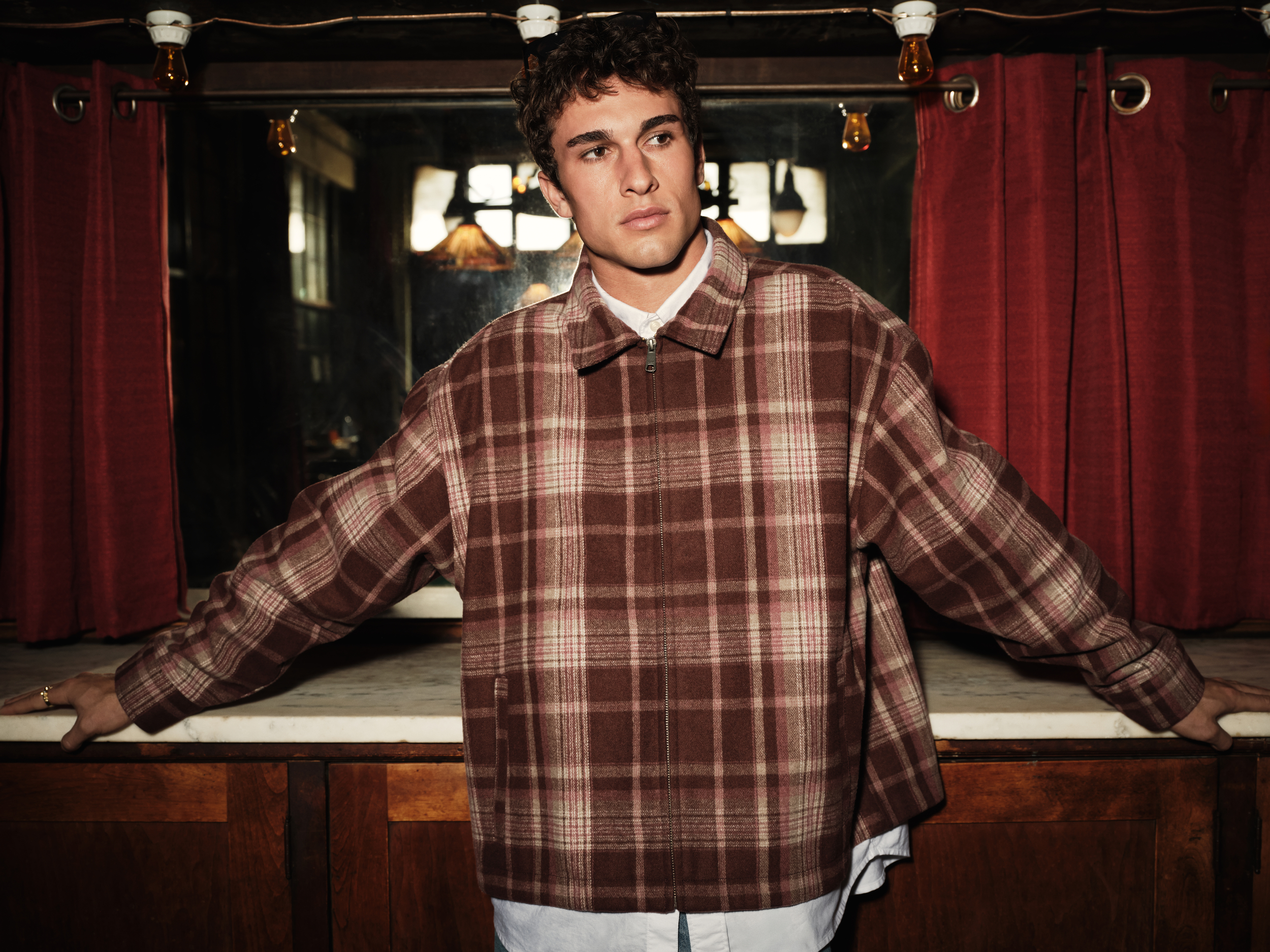



Two jackets can look identical on the rail and carry completely different labels. That’s the puffer jacket vs down jacket confusion, and knowing which word means what changes how you shop.
One describes how your jacket is built. The other describes what’s inside it.
That matters more than it sounds. A Delhi January morning sits close to 0°C while a Mumbai evening rarely drops below 15°C, so you’re dressing for two different winters. Here’s how to tell them apart, whether you’re after jackets for men or winterwear for women at American Eagle.
What Is a Puffer Jacket
A puffer jacket is defined by its construction, not its filling. The shell is stitched into channels called baffles, each one packed with insulation, and that quilted grid gives a puffer its ribbed, rounded look.
What goes inside those baffles varies: synthetic fill, natural down, or a blend. So “puffer” tells you the shape of a jacket and very little about its warmth. What it does tell you is that it’ll layer over almost anything and read casual by default.
For a puffer jacket for men, a black or navy puffer over a hoodie with straight jeans for men is the easy weekday version. For a puffer jacket for women, a cropped puffer with High-Waisted jeans for women and white sneakers keeps the proportion clean, while a long hooded parka handles an early commute.
What Is a Down Jacket
Down is the soft under-plumage beneath the outer feathers on ducks and geese. It traps air in tiny pockets, and trapped air keeps you warm. That’s why a down jacket gives so much warmth for so little weight, and packs so small.
Two numbers on the label decide how warm it really is.
Fill power is the volume in cubic inches that one ounce of down fills. So 600 fill power means one ounce fluffs to 600 cubic inches, and higher numbers mean fluffier, more efficient down.
Fill weight is different: how much down is in the jacket.
Here’s why you need both. A jacket with 330g of 650 fill can be as warm as one with 120g of 800 fill, just heavier and bulkier, so a high fill power number on its own proves nothing. Around 600 to 700 suits everyday wear, 800 and above is built for technical outdoor sport.
Whether it’s a down jacket for men or a down jacket for women, read both numbers before the price.
Puffer vs Down Jacket: Key Differences
Side by side, the puffer jacket vs down jacket comparison lands like this.
| Feature | Puffer jacket | Down jacket |
| Meaning | Padded or quilted construction | Jacket insulated with down |
| Insulation | Synthetic, down or other fill | Natural down |
| Warmth | Depends on fill and design | Often excellent warmth for its weight |
| Moisture | Depends on shell and insulation | Down can lose insulating performance when wet |
| Packability | Varies by filling and construction | Often compresses efficiently |
| Care | Follow garment care instructions | Follow care instructions; dry thoroughly |
Which Jacket Should You Choose
Start with the kind of cold you’re dressing for, not the temperature alone.
Choose a puffer jacket if you want one versatile layer for daily wear. It goes over a tee, a shirt or a hoodie, and carries a city winter comfortably.
Choose a down jacket if low weight and efficient insulation matter most. On a hill-station trip or through a Delhi NCR cold wave, that warmth-to-weight advantage earns its place.
Now the part most guides skip: wet down stops insulating. Water collapses the clusters, the air pockets vanish, and the fill compresses into a mat that traps nothing. Synthetic insulation holds useful warmth when damp and dries far faster, so it’s the safer call anywhere moisture is likely. Water-resistant down treatments help, but cost more.
Then match it to your life: Bangalore and Mumbai want a light layer, Delhi and Jaipur want more. Factor in upkeep too, since down needs careful low-heat drying. American Eagle’s layering range covers both.
Conclusion
The puffer jacket vs down jacket question sorts itself once you stop treating the two as rivals. Puffer is the build, and down is one of the fills it can carry. Work out how cold and how damp your winter really gets, then pick the layer you’ll reach for without thinking. Explore the winter layering edit at American Eagle and find yours.
Frequently Asked Questions
1. What is the difference between a puffer jacket and a down jacket?
A. A puffer jacket is defined by its quilted, baffled construction, a down jacket by its filling. Most down jackets are puffers too, but a puffer can hold synthetic insulation instead.
2. Is a down jacket warmer than a puffer jacket?
A. Often, for its weight, because down gives strong warmth with very little bulk. But a well-filled synthetic puffer can match it, so compare fill power and fill weight, not the category name.
3. Are puffer jackets suitable for rainy weather?
A. A synthetic-filled puffer copes better with damp, because synthetic insulation keeps useful warmth when wet and dries quickly. Check the shell for a water-repellent finish before relying on it in rain.
4. Which is better for everyday winter wear: a puffer jacket or a down jacket?
A. For most Indian cities, a puffer jacket layers easily, suits daily commutes, and copes better with damp air if synthetic-filled. Save a down jacket for colder, drier conditions.
5. Are puffer jackets waterproof?
A. Not by default: padding is insulation, not waterproofing, and water resistance comes from the outer shell and its finish, so read the product details rather than trust the quilting.
6. Is a puffer jacket the same as a down jacket?
A. Not quite: almost every down jacket is a puffer, but not every puffer is a down jacket. The puffer jacket vs down jacket difference sits in the fill. Layer either over tops for women or a tee.